




























Login
Register
Top Leagues
Country


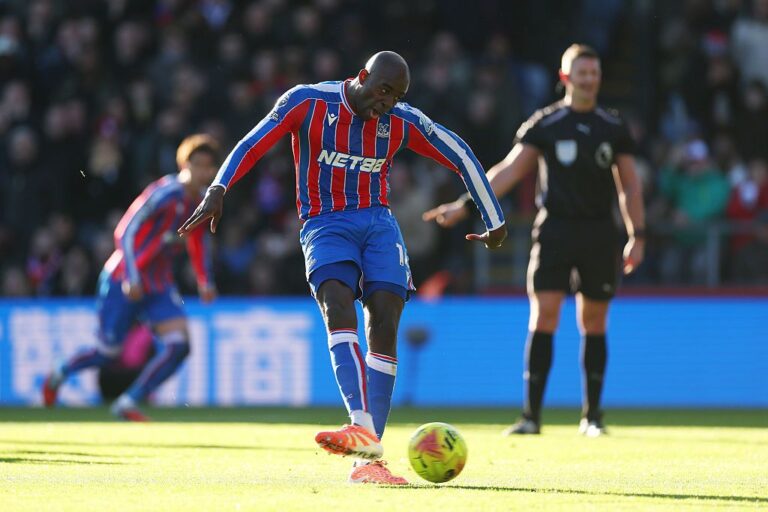
Crystal Palace forward Jean-Philippe Mateta was permitted to re-take his penalty against Manchester United after a double touch occurred on his initial attempt.
The 28-year-old earned the penalty after being fouled in the area by Leny Yoro, and confidently approached the spot to take the shot.
He successfully converted the penalty on his first try, but VAR indicated that the French striker had made contact with the ball twice, striking it with his right foot into his left.
You may like
Mateta successfully converted the second attempt as well (Image credit: Getty Images)
Instead of disallowing the goal and resuming play, as occurred with Atletico Madrid striker Julian Alvarez in a similar incident against Real Madrid in the Champions League last season, Mateta was given another opportunity by the officials.
He stepped up again and placed the ball low into the opposite corner from his initial shot, once again outsmarting goalkeeper Senne Lammens.
Despite a VAR review, Mateta converts the penalty to put Palace in front 🔥📺 @TNTSports & @DiscoveryPlusUK pic.twitter.com/x8IuhFvt75November 30, 2025
Mateta was permitted to re-take the penalty due to a rule modification implemented over the summer, which was instituted as a result of that Alvarez scenario.
Historically, Law 14 specified that the kicker could not play the ball again until it had touched another player; however, the International Football Board Association (IFAB), which governs the rules of the game, has recently amended this policy in cases similar to Mateta's.
Now, if the double touch is clearly unintentional, the kick-taker is allowed to reposition the ball and take the penalty again.
This rule does not hold if the player deliberately touches the ball twice, in which case the defending team would receive a free-kick.
The modification was enacted on July 1 and was communicated to all relevant parties during the summer.
Mateta and Palace gained from a recent rule alteration (Image credit: Getty Images)
In the view of eScored, this is a just update to the regulations.
It seems unfair to penalize a player for an obviously accidental occurrence when they’re not attempting to secure any undue advantage.
However, the defending team, in this instance, United, might feel slightly wronged that Mateta was allowed to rectify his own mistake.
Select matches to build your Betslip